
The tour operator is the one who designs an organised trip and runs it: it chooses the stages, negotiates the accommodation, hires or employs the guides and drivers, sets the departure dates, publishes a price and sells the product — directly, or through agencies that distribute it. When a traveller buys a tour, the tour operator is responsible for the whole of what it assembled, even though each night, each transfer and each visit is delivered by partners. That overall responsibility is what makes the trade, and what separates it from the agency, which sells services it does not design.
Design, run, answer
Design, run, answer: none of these verbs can be delegated. Design: decide that an itinerary exists, in what order, with what driving times, which accommodation, which visits, at what price. Run: actually get the groups on the road, with maintained vehicles, trained guides, partners who know when the group is arriving. Answer: handle the complaint, the postponement, the refund, the incident — because the client bought a whole, and it is the seller of the whole they turn to.
An operator that merely buys tours from another and puts its brand on them practises a different trade, that of distributor. It is not illegitimate; it is simply something else, and the traveller has the right to know who built what they are buying.
Scouting: what happens before the tour exists
An itinerary is not drawn on a map. It is travelled — with the vehicles that will be used, in the seasons when it will be sold — to find out how many hours of road really separate two stages, where people stop to eat, which track becomes impassable after rain, which lodging keeps its commitments. That scouting is repeated regularly, because roads, site managers and hosts change. A tour sold for years without being rewalked is a tour on which the operator no longer knows what it is selling.
Scouting is also where the information the client will receive gets decided: the real duration of walks, the elevation, the comfort of the nights, the availability of access to care. A programme that states the physical level required and the accommodation conditions day by day is no brochure flourish; it is the basis on which a traveller decides whether they can go.
Included, not included: the list that prevents disputes
The price of a tour is an assembly, and the operator knows each component: accommodation, ground transport, guide, entrance fees, planned meals, permits where a site requires them. It also knows what it has left out of the price, and lists it: international flights, visa, insurance, drinks, tips, personal expenses, optional activities. That list of “not included” items matters as much as the programme, because it is where most disputes are born.
Some items call for particular precision. Entrance fees and permits for certain sites — parks, reserves, monuments — are set by the authority that manages them, often issued in the traveller’s name, sometimes non-refundable once issued; the operator collects and passes them on, it decides neither the amount nor the conditions. Travel and repatriation insurance, which many operators require before departure, is taken out by the traveller with an insurer; the operator may make it compulsory, it is not its guarantor. The visa, finally, remains a consular decision, and an operator that accepts a booking before the visa is obtained must state in writing what happens to the deposit if the visa is refused.
Departures, numbers and what “guaranteed departure” means
A group tour has an economy: a guide, a vehicle and booked accommodation cost the same for three travellers or for ten. Most operators therefore set a minimum number below which the departure is not viable, and a maximum above which the quality of accompaniment suffers. Both figures are published, and the consequence of the minimum not being reached is written down: postponement, another date offered, or a full refund of the sums paid.
The phrase “guaranteed departure” has a precise meaning: the tour will leave even if the minimum number is not reached, at the operator’s expense. It does not mean nothing will change in the programme, nor that an external event cannot postpone the trip. An operator uses that phrase for what it means, not to reassure about everything.
Guides, drivers, hosts: what the operator chooses and what it controls
On the ground, the traveller does not see the tour operator; they see their guide, their driver, the team at a lodge. The quality of the tour therefore depends on the care taken in choosing those people and checking what they can do. A salaried or regular guide, trained in first aid and knowing the itinerary for having already led it; a driver whose driving, rest times and vehicle have been checked — the ILO points out, in its guidelines on decent work and road safety in the transport sector, that driver fatigue and vehicle condition are causes of accidents over which the employer has leverage; hosts with whom a contract, and not merely a habit, fixes what is owed.
The operator does not control everything: a hotel can overbook, a road can close, a guide can fall ill. What it controls is having planned a fallback for each of those cases, and being able to put it into effect the same day.
Open areas, closed areas: the decision that is not negotiable
A tour operator leading groups into natural spaces or sensitive regions works under the authority of those who manage them — park administrations, local authorities, official services that publish the status of an area. When a site is closed, when an authority advises against or forbids access, the itinerary is changed, postponed or replaced. It is not a commercial question, and no client, however insistent, can buy an exception.
The counterpart of that rigour is candour about what the operator knows and does not know. It can say that an area is open and monitored with the competent authorities on the date of departure; it cannot say that it is free of danger, or that nothing will happen. The same goes for health: the operator flags the vaccination requirements and recommendations of the destination country, as published by the health authorities — WHO keeps up to date, for travellers, the information on infectious risks and vaccination requirements — and refers each person to a health professional for what concerns them personally. It advises no treatment.
Changing, postponing, cancelling, refunding
A tour’s terms of sale describe four situations and what happens in each. The client changes: which changes are possible, at what cost, until what date. The client cancels: which retention scale applies according to the notice given, and what is never refunded because already committed to a third party — a named permit, a non-cancellable night. The operator cancels: in which cases, and with what refund, in principle full when it is the operator that does not send the group. An external event prevents the trip: what is offered — postponement, credit, refund of uncommitted sums — and within what time.
Those terms are handed over before the deposit is paid, not after. An operator that sends them once the money has been received has already begun to lose the client, whatever the document says.
During the tour, and after
A tour under way needs a reachable contact who is not the guide — because the guide is busy running the day, and because some decisions, such as changing accommodation or bringing forward a return, are taken at head office. The traveller receives that contact before departure. On return, the complaint is handled in writing, with an answer on what was found, what fell to the operator and what fell to a third party, and what is offered.
An operator learns more from its complaints than from its glowing reviews: that is where you see what a scouting trip had not foreseen and what a partner did not deliver.
In the African context
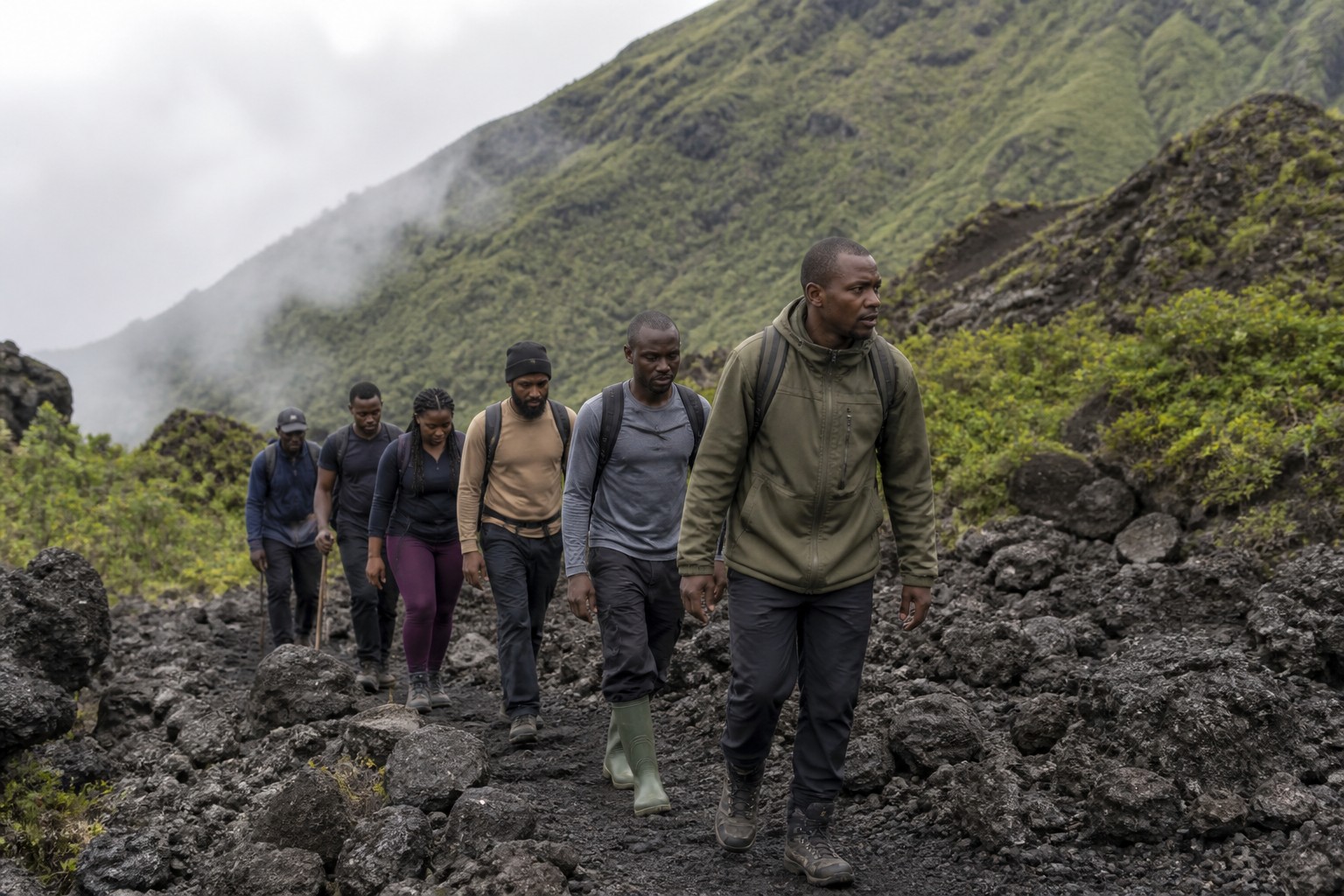
A tour operator selling tours on the continent is, more often than not, not master of its own ground. A large share of the tours sold in Africa take place in or around parks, reserves and natural sites whose access is governed by an administration: named permits issued in advance, daily quotas, mandatory guides or trackers, areas open or closed according to the season or the situation. It runs its product under licence, and its competence consists in knowing those rules better than its clients and building its tours within them, not beside them. IUCN, whose categories serve most states as the reference for classifying their protected areas, insists on management that involves the communities living around those spaces — and an operator that employs those communities, as porters, hosts, cooks or local guides, is not doing charity: it is securing its access.
Then the road. Long distances, tracks that change with the rains, four-wheel-drive vehicles that must be maintained in-house because no rental company will do it to the standard the risk demands: ground transport is, on many African tours, the heaviest and most exposed service. That is why scouting is repeated more often there than elsewhere, and why driver fatigue is treated as a safety issue and not as an adjustment variable.
There remains the clientele: on many markets across the continent, domestic and regional demand — business travellers, families, young urban dwellers — is changing what operators sell and to whom, a shift that UN Tourism supports through its regional programme for Africa. A tour operator that designs its tours only for a distant clientele deprives itself of part of its market, and often of the most stable part.
The day the area is closed
A group arrives at the entrance of a park and learns that the planned sector has been closed since the day before. With a reseller of tours, this is the moment of panic: calls to the supplier, waiting, a group stranded, a refund argued over weeks later. With a tour operator that built its tour, this moment was foreseen — the replacement route has been scouted, the fallback host knows the operator by name, the guide has the authority to decide, and the client had read, before paying the deposit, what would happen in exactly this case.
The difference between the two shows neither on the brochure nor in the price. It shows on that day, and it is for that day that a tour is built before it is sold.