
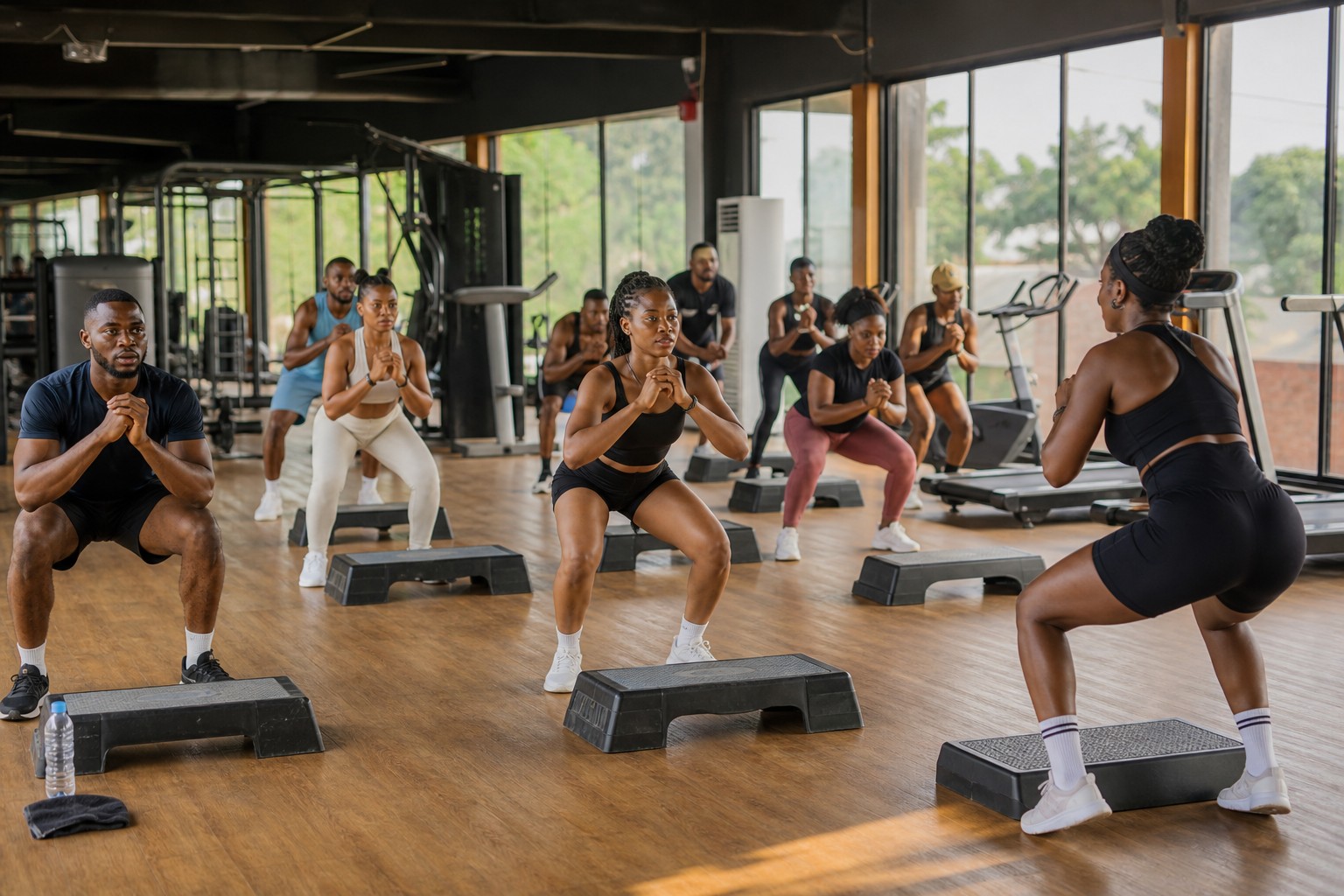
Most gyms look alike on opening day. They stop looking alike afterwards: when machines break down and stay broken, when the air turns unbreathable at peak hours, when nobody walks the floor any more to correct a dangerous position. The trade lives in that stretch of time, not in the photograph taken on day one.
Selling access, or selling supervision
A gym sells an entry right first: a space, machines, opening hours. That is the base, and it is judged on concrete things — the state of the equipment, cleanliness, ventilation, lighting, changing rooms, safety at quiet hours as much as busy ones.
Most gyms also sell something else: a presence. A team member out on the floor, supervised group classes, a welcome for people who have never walked into such a place before. That part decides loyalty, because it turns premises into a service.
Both models are defensible, but they are not promised the same way. A gym that advertises supervision must be able to say when it is there, what it does, and what it does not do. Floor staff are neither doctors nor physiotherapists: they watch, advise and correct within their scope, and refer on beyond it.
The first visit of someone who has never come before
This is the most decisive moment, and often the most rushed. Someone walking in for the first time does not know where to stand, what to touch, or how to behave. Most drop-outs are decided right there.
A serious induction means walking the spaces, explaining how the place works, asking what the person is looking for and what they have already practised, and collecting the constraints they declare — known pain, a medical condition being followed, current treatment, pregnancy where relevant. That collection exists to know what to point them towards, and to know when not to: a medical constraint is respected as described, it is not reinterpreted at the front desk.
The starting point offered stays modest and understandable. The World Health Organization points out in its physical activity fact sheet that regular activity, even limited, counts for more than intense activity that gets abandoned. For a gym that translates very concretely: a first visit that makes someone want to return beats a session that leaves them aching for a week.
The floor: presence, watching, correcting
On the floor, the work is made of walking around and watching. You see how people set themselves up, put a weight back in place, flag a machine that moves, step in when a position becomes risky. Much of this work is invisible and only becomes visible when it is not done.
Correcting takes tact. You speak to the person, explain what you see, offer something else — and you ask before touching, when a gesture works better than an explanation. Nobody should have to put up with unannounced contact, and nobody should be pulled up in front of others over anything but their safety.
A serious gym also sets rules for shared life and enforces them without aggression: put the equipment back, wipe a bench down, do not sit on a station through an endless rest, let people through. Those rules protect the most intimidated members above all.
Equipment: condition, maintenance, taking it out of service
A piece of gym equipment is machinery under heavy use. It is inspected, adjusted and maintained according to its manufacturer's instructions, and taken out of service when it is no longer safe — which means being able to say a machine is out of order, to display it, and to state a date for its return.
The rule that sets well-run gyms apart is simple: a wear part or a safety part is not improvised. A cable, a strap, a pin, a fixing is replaced with the part designed for it, by someone who knows how. An improvised repair on equipment carrying a load is the kind of decision that stays invisible — until the accident.
The rest is organisation: a record of what was checked and when, a clear route for reporting a fault, an identified person in charge. Without that, a doubtful machine stays in service because everyone assumes someone else is dealing with it.
Air, water and shared spaces
A place where people sweat together raises ordinary questions: ventilation, crowding, surfaces everyone touches, changing rooms, access to water. A gym that cannot guarantee breathable air at peak time has an occupancy problem, not a communication problem.
For shared surfaces and equipment, the World Health Organization has published guidance on cleaning and disinfecting surfaces in shared settings. What a gym takes from it comes down to three ideas: clean before disinfecting, deal first with what hands actually touch, and make the gesture possible for members themselves — something to wipe with, within reach, without crossing the room. The detail of products and dilutions belongs to trained staff and manufacturer instructions, not to an article.
Changing rooms deserve particular attention: they are where crowding, humidity and privacy meet. Safety counts there as much as cleanliness.
Memberships and bookings: what has to be in writing
A gym lives on commitments over time, and that is where most disputes are born. What makes an offer vary is identifiable: the length of commitment, the hours accessible, whether group classes are included, access to supervision, peak periods, extra services.
What has to be written down and handed over matters just as much: what the membership covers, what it does not, how to suspend or end it, what happens during a long absence, what becomes of a membership paid in advance. No universal rule exists here: every country has its own framework, and a serious gym states its own rather than invoking custom.
Access for minors calls for an explicit decision: depending on the local framework, a guardian's authorisation, information for parents and an adapted practice apply, along with supervision for certain areas. Here again, the gym sets its rule and writes it down.
On booking, the International Telecommunication Union measures real but very uneven progress in internet use between countries and social groups. A gym therefore does well to let channels coexist: online booking for those who use it, sign-up at the desk for everyone else, messaging for reminders, mobile payment where it is widespread.
Running the place
Behind the visible space there is a team, long opening hours, an early start and a late finish. Around its programmes for improving work in small enterprises, the International Labour Organization built a simple approach: start from what exists and fix first what costs little and weighs a lot. For a gym that looks very concrete — rotating posts, real breaks, storage that avoids awkward lifting, enough light at reception, cleaning materials within reach.
Questions specific to the place come on top: continuity of the power supply where it is uncertain, safety at quiet hours, the presence of at least one person trained in first aid according to what the local framework provides, and insurance for the activity, which also depends on the country.
Professionalising a gym means making all of that verifiable: a displayed schedule, a maintenance log, written terms, receipts, a member file kept with restraint and protected, and a team that knows what it is allowed to say.
In the African context
Operating conditions vary a great deal between countries, cities, neighbourhoods and income levels: there is no single African gym model, and two gyms on the same avenue do not serve the same clientele.
The first reality is infrastructure. Depending on the city, continuity of electricity, availability of water and quality of ventilation determine what a gym can genuinely promise. Some equip themselves accordingly, others organise their hours around the constraints of the neighbourhood.
The second is the cost of equipment. Depending on the market, machines are imported, refurbished or built locally, and spare parts do not arrive at the same pace. That argues for equipment that can be repaired on the spot rather than machines impossible to maintain once the warranty has passed.
The third is the coexistence of forms of practice. In several cities, gyms sit alongside groups training outdoors, neighbourhood clubs and sports associations. That is not only competition: it is also a pool of instructors and members.
The fourth is the clientele and its purchasing power. Depending on the neighbourhood, short formulas, split payments or memberships paid for by an employer weigh more than long commitments. Demand from women, from older people and from young people does not call for the same hours or the same spaces, and a gym that ignores this cuts itself off from part of its market.
The fifth is professionalisation. Depending on the country, supervision qualifications, insurance obligations and operating conditions differ, and are not always legible. The gyms that move forward are those that make their operation demonstrable: traced maintenance, written terms, identified staff, and referral to a health professional when the situation calls for it.
What a gym does not promise
It promises no bodily result, no timeframe, no figure. It does not promise that a membership will produce a practice: access is not attendance. It comments neither on pain, nor on treatment, nor on eating: those belong to health professionals, towards whom it refers. It cannot guarantee that a machine will never break down, but it can guarantee that a broken machine will be flagged and taken out of service.
What it can promise is verifiable: hours that hold, equipment maintained and checked, breathable air, shared spaces cleaned, a human presence described honestly, membership terms in writing, and a welcome you can walk into knowing nothing at all.